

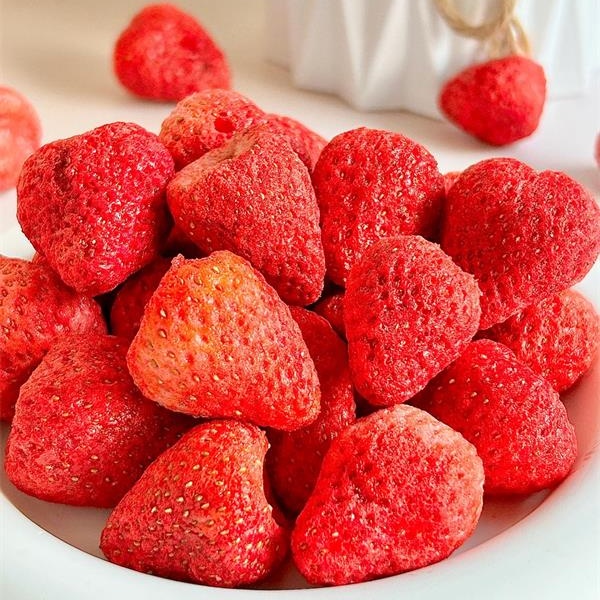
कटे या छोटे टुकड़ों में कटे हुए स्ट्रॉबेरी खरीदें। व्हाइट चॉकलेट बार्क पर फ्रीज-ड्राइड स्ट्रॉबेरी एक समय में बहुत लोकप्रिय हो गई थी और आज भी उतनी ही लोकप्रिय है। ये ग्राहक अक्सर कम मात्रा में खरीदते हैं लेकिन बार-बार खरीदते हैं, और दिखने में एकरूपता को लेकर सबसे ज्यादा संवेदनशील होते हैं।
ओईएम और प्राइवेट लेबल पर बातचीत
फ्रीज-ड्राइड स्ट्रॉबेरी की थोक आपूर्ति करने वाले ब्रांडों का एक बड़ा हिस्सा स्वयं उत्पादन नहीं कर रहा है - वे एक लेबल बना रहे हैं, एक उत्पाद निर्दिष्ट कर रहे हैं, और एक ऐसे कारखाने से माल प्राप्त कर रहे हैं जो आवश्यकताओं को पूरा कर सके।
हमारे यहाँ यह प्रक्रिया आम तौर पर इस प्रकार काम करती है:
ट्रायल ऑर्डर की शुरुआत मिश्रित कंटेनर से होती है — 20 जीपी में 3 या 4 अलग-अलग एसकेयू एक साथ पैक किए जाते हैं, ताकि खरीदार पूरी मात्रा में किसी एक उत्पाद का ऑर्डर देने से पहले कई फॉर्मेट या पैक साइज का परीक्षण कर सके। नियमित ऑर्डर के लिए न्यूनतम ऑर्डर मात्रा (एमओक्यू) एक मानक 20-फुट कंटेनर है।
कस्टम पैकेजिंग आम बात है। अधिकांश रिटेल ब्रांड अपना खुद का लेबल, अपनी पसंद के पाउच, कभी-कभी बैग के विशिष्ट रंग या विंडो कॉन्फ़िगरेशन चाहते हैं। कस्टम प्रिंटेड पैकेजिंग के लिए OEM लीड टाइम, आर्टवर्क कन्फर्म होने के बाद 25-30 दिन का होता है। स्टैंडर्ड पैकेजिंग, बिना कस्टम प्रिंट के, स्टॉक उपलब्ध होने पर 15 दिनों में तैयार हो सकती है।
प्रमाणन की आवश्यकताएं गंतव्य बाजार के अनुसार अलग-अलग होती हैं। यूरोपीय खरीदार लगभग हमेशा बीआरसी को प्राथमिकता देते हैं। मध्य पूर्व और दक्षिण पूर्व एशियाई खरीदारों को हलाल की आवश्यकता होती है। कुछ उत्तरी अमेरिकी खुदरा चैनलों को कोषेर की आवश्यकता होती है। जैविक प्रमाणन उन ब्रांडों के लिए प्रासंगिक है जो इस श्रेणी में अपनी स्थिति मजबूत करना चाहते हैं। ये सभी प्रमाणन मान्य हैं - वेबसाइट पर दावा किए गए प्रमाणनों की सूची के बजाय वर्तमान प्रतियां मांगें।
नमूने 7-15 दिनों में भेज दिए जाते हैं। नमूने का शुल्क पहले थोक ऑर्डर में वापस कर दिया जाता है। हम चाहते हैं कि खरीदार उत्पाद खरीदने से पहले उसकी ठीक से जांच कर ले, बजाय इसके कि उत्पादन के बाद कोई गड़बड़ी पाई जाए।
उत्पाद के पीछे का कारखाना
यह संयंत्र 2006 से फ़ुज़ियान के झांगझोउ में कार्यरत है। यह महत्वपूर्ण है क्योंकि फ़ुज़ियान में फलों की आपूर्ति के लिए व्यापक कृषि नेटवर्क है और निर्यात के लिए ज़ियामेन बंदरगाह के माध्यम से सीधी पहुँच है। ताजे फलों को फ्रीज़-ड्रायर तक ले जाने में लगने वाला समय कच्चे माल की गुणवत्ता को इस तरह प्रभावित करता है जो विनिर्देश पत्रक में तो नहीं दिखता, लेकिन तैयार उत्पाद के स्वाद में अवश्य झलकता है।
29 फ्रीज़-ड्राइंग लाइनें। संपूर्ण उत्पाद श्रृंखला का वार्षिक उत्पादन: 10,000 टन। खाद्य विज्ञान और जैव इंजीनियरिंग में 50 से अधिक विशेषज्ञों की अनुसंधान एवं विकास टीम।इस पैमाने पर फ्रीज-ड्राइड खाद्य पदार्थ निर्माता के रूप में, उत्पादन प्रवाह मानकीकृत है और प्रत्येक बैच का पता लगाया जा सकता है: कच्चे माल की आवक निरीक्षण → छँटाई और धुलाई → पूर्व-फ्रीजिंग → लाइयोफिलाइजेशन → प्रक्रिया के बाद गुणवत्ता जांच → पैकेजिंग → अंतिम बहिर्गमन निरीक्षण।
निर्यात बाजारों में अमेरिका, जर्मनी, ब्रिटेन, स्पेन, जापान, दक्षिण कोरिया, रूस, इंडोनेशिया, सिंगापुर और मलेशिया शामिल हैं। उत्पाद को इन सभी बाजारों में आयात संबंधी आवश्यकताओं को पूरा करना होता है - जो कि प्रमाणन प्रणाली (HACCP, BRC, HALAL, KOSHER, Organic) का एक हिस्सा है।पैकेजिंग — वह हिस्सा जिसे खरीदार तब तक नजरअंदाज करते हैं जब तक कि वह कोई समस्या पैदा न कर दे।
उत्पाद की गुणवत्ता इस बात पर निर्भर करती है कि अंतिम उपभोक्ता तक पहुँचने तक उसके आसपास की परिस्थितियाँ कैसी हैं।खुदरा बिक्री के लिए इस्तेमाल होने वाले फॉइल पाउच में उचित अवरोधक गुण होने चाहिए — विशेष रूप से, नमी वाष्प संचरण दर जो लक्षित शेल्फ लाइफ के अनुरूप हो। सस्ता लैमिनेट प्रति यूनिट कुछ सेंट बचाता है, लेकिन कुछ ही महीनों में उत्पाद के नरम होने की शिकायतें पैदा कर देता है। उच्च अवरोधक गुणों वाले पाउच अधिक महंगे होते हैं और उत्पाद की सुरक्षा करते हैं।
हीट सील की अखंडता महत्वपूर्ण है। हमने देखा है कि लंबी दूरी के समुद्री परिवहन में कंपन के कारण सील में खराबी आ जाती है - यह सामग्री की खराबी नहीं है, बल्कि उत्पादन के एक चरण में सीलिंग दबाव में थोड़ी असमानता है। यह प्रक्रिया नियंत्रण का मामला है, और यही कारण है कि सील-पुल परीक्षण प्रत्येक बैच पर किए जाने चाहिए, न कि केवल प्रारंभिक डिज़ाइन नमूनों पर।
डेसिकेंट की मात्रा सभी उत्पादों के लिए एक जैसी नहीं होती। सिलिका जेल पैकेट को पैक की मात्रा के अनुसार ही चुनें। 50 ग्राम के खुदरा पैकेट के लिए उतने डेसिकेंट की आवश्यकता नहीं होती जितनी 10 किलोग्राम के थोक कार्टन के लिए। अधिक मात्रा में डेसिकेंट का उपयोग करने से अनावश्यक लागत बढ़ती है; कम मात्रा में उपयोग करने से गांठें बन जाती हैं।
| थोक कार्टन ऑर्डर के लिए, भरने के बाद भीतरी पीई लाइनर को सील किया जाता है और कंटेनर स्टैकिंग के लिए उपयुक्त संपीड़न-शक्ति वाले कार्डबोर्ड का उपयोग किया जाता है। हमें कई खरीदारों ने बताया है कि उनके पिछले आपूर्तिकर्ता का उत्पाद पैलेट की निचली परत पर कुचले हुए कार्टन के साथ पहुंचा था। अंदर का उत्पाद तकनीकी रूप से ठीक था। लेकिन ग्राहक संबंध ठीक नहीं थे। | निर्यात बाजार और उनमें से प्रत्येक को वास्तव में किस बात की परवाह है |
|---|---|
| विभिन्न बाजारों में प्रवेश की आवश्यकताएं और खरीदारों का व्यवहार अलग-अलग होता है। | उत्तरी अमेरिका: खरीदार 100 ग्राम और उससे अधिक के बड़े खुदरा आकार चाहते हैं। प्रीमियम होल-बेरी फॉर्मेट। ऑर्गेनिक एक वास्तविक प्रीमियम सेगमेंट है, न कि केवल एक विशिष्ट वर्ग। यहाँ प्राइवेट लेबल ब्रांड विनिर्देश दस्तावेज़ों के मामले में सुव्यवस्थित होते हैं। |
| यूरोप: बीआरसी सर्टिफिकेशन न्यूनतम मानक है। विशेष रूप से जर्मन और डच खरीदार बेहद तकनीकी होते हैं - वे पूर्ण प्रमाण पत्र (CoA) दस्तावेज़, प्रयोगशाला परीक्षण रिपोर्ट मांगेंगे और कभी-कभी पहले ऑर्डर के लिए भुगतान जारी करने से पहले तृतीय-पक्ष परीक्षण का अनुरोध भी करेंगे। इस प्रक्रिया के लिए योजना बनाएं। | दक्षिणपूर्व एशिया: अधिकांश बाजारों के लिए हलाल अनिवार्य है। इंडोनेशिया, मलेशिया और सिंगापुर में शहरी खुदरा क्षेत्र में इसकी मांग तेजी से बढ़ रही है। उत्पाद सीधे कारखाने से खरीदने के बजाय व्यापारिक कंपनियों के माध्यम से खरीदे जाते हैं। |
| मध्य पूर्व: यहाँ आमतौर पर ऑर्डर की मात्रा अधिक होती है, लेकिन विशिष्टताओं पर बातचीत पहले से ही सावधानीपूर्वक होनी चाहिए। यहाँ खरीदार अक्सर क्षेत्रीय वितरकों के माध्यम से काम करते हैं। उत्पादन से पहले उत्पाद की विशिष्टताओं और प्रमाणन आवश्यकताओं की पुष्टि करवाना प्रत्यक्ष खरीदार वाले बाजारों की तुलना में अधिक महत्वपूर्ण है। | जापान और दक्षिण कोरिया: यहाँ के लोग उत्पाद की दृश्य गुणवत्ता और पैकेजिंग की फिनिशिंग को लेकर बेहद सख्त होते हैं। विशेष रूप से जापानी खुदरा खरीदार किसी भी तरह की कॉस्मेटिक खराबी (जैसे दरार, रंग में भिन्नता, आकार में असमानता) वाले उत्पाद को अस्वीकार कर देते हैं, जबकि अन्य बाजारों में इसे स्वीकार किया जाता है। |
| अक्सर पूछे जाने वाले प्रश्न | फ्रीज़-ड्राइड और एयर-ड्राइड स्ट्रॉबेरी में असल अंतर क्या है? |
| हवा में सुखाने की प्रक्रिया में ऊष्मा का उपयोग होता है। ऊष्मा से कोशिका संरचना नष्ट हो जाती है, रंग गहरा हो जाता है, विटामिन सी नष्ट हो जाता है और त्वचा सख्त हो जाती है। फ्रीज ड्राइंग में कम तापमान पर ऊर्ध्वपातन द्वारा नमी को हटाया जाता है - इससे संरचना बरकरार रहती है, रंग चमकदार बना रहता है और त्वचा हल्की और कुरकुरी रहती है। खाद्य निर्माण में पुनर्जलीकरण के लिए, फ्रीज-ड्राइड उत्पाद आसानी से पुनः उपयोग योग्य हो जाते हैं; जबकि हवा में सुखाने से ऐसा नहीं होता। | क्या आप फ्रीज-ड्राइड स्ट्रॉबेरी को पहले पानी में भिगोए बिना उनसे बेकिंग कर सकते हैं? |
| जी हां, और यही मुख्य कारण है कि बेकरी में इनका इस्तेमाल बहुत अच्छा होता है। इन्हें सूखा ही डालें — ये मिश्रण और बेकिंग के दौरान घोल से नमी सोख लेते हैं। ज़्यादा नमी वाले घोल में, इन्हें मिश्रण के अंत में डालें ताकि बेकिंग से पहले ये नरम न होने लगें। चॉकलेट कोटिंग या दही टॉपिंग जैसी बिना बेक की जाने वाली चीज़ों में, ये कुरकुरे रहते हैं और स्वाद बढ़ाते हैं। | मुझे वास्तव में किन प्रमाणपत्रों के लिए आवेदन करना चाहिए, और कौन से प्रमाणपत्र केवल मार्केटिंग के लिए हैं? |
| HACCP खाद्य सुरक्षा का बुनियादी मानक है – हर गंभीर आपूर्तिकर्ता के पास यह होना चाहिए। BRC ब्रिटेन और यूरोपीय संघ के खुदरा चैनलों के लिए महत्वपूर्ण है। हलाल मुस्लिम-बहुल बाजारों में प्रवेश के लिए अनिवार्य है। कोषेर उत्तरी अमेरिका के विशिष्ट खुदरा चैनलों के लिए महत्वपूर्ण है। यदि आपका ब्रांड वहां स्थापित है तो ऑर्गेनिक उत्पाद प्रासंगिक हैं। सबसे महत्वपूर्ण बात: हमेशा वेबसाइट पर लगे लोगो के बजाय, वर्तमान वैधता तिथि वाला वास्तविक प्रमाणपत्र मांगें। | मैं अपने गोदाम में फ्रीज-ड्राइड स्ट्रॉबेरी के एक बड़े पैलेट को कैसे स्टोर करूं? |
| 25°C से कम तापमान, 65% से कम आर्द्रता, सीधी धूप से बचाव और तेज़ गंध वाले उत्पादों से दूर रखें। फ्रीज़-ड्राइड फल छिद्रयुक्त होते हैं - ये आस-पास के भंडारण से अप्रिय गंध सोख सकते हैं। उच्च आर्द्रता वाले वातावरण में पैकेजिंग परत जल्दी खराब हो जाती है, भले ही डिब्बा सीलबंद हो। इसे रेफ्रिजरेटर में रखने की आवश्यकता न होने के कारण इसे सामान्य किराने के सामान की तरह न समझें। | न्यूनतम ऑर्डर मात्रा (MOQ) क्या है और क्या मैं ऑर्डर देने से पहले कई फॉर्मेट का परीक्षण कर सकता हूँ? |
| मानक न्यूनतम ऑर्डर मात्रा (MOQ) 20 ग्राम का कंटेनर है। पहले ऑर्डर के लिए, एक कंटेनर भरने के लिए 3-4 प्रकार के उत्पाद (जैसे साबुत बेरी, कटी हुई बेरी और पाउडर) मिलाना आम और उचित है। इससे आप किसी एक उत्पाद श्रृंखला पर अत्यधिक निर्भरता के बिना विभिन्न प्रारूपों में बाजार की प्रतिक्रिया का परीक्षण कर सकते हैं। | स्ट्रॉबेरी पाउडर और सामान्य फ्रीज-ड्राइड स्ट्रॉबेरी के टुकड़ों में क्या अंतर है? |
पाउडर, फ्रीज़-ड्राइंग के बाद पीसे गए उत्पाद जैसा ही होता है। हालांकि, इसके रखरखाव में काफ़ी अंतर होता है। पाउडर का सतही क्षेत्रफल बहुत अधिक होता है, इसलिए यह हवा से नमी को बहुत तेज़ी से सोख लेता है – इसे वैक्यूम-सील्ड आंतरिक बैग और सख्त भंडारण स्थितियों की आवश्यकता होती है। हवा के संपर्क में आने पर इसका ऑक्सीकरण भी तेज़ी से होता है। उपयोग के लिहाज़ से: पाउडर का उपयोग पेय पदार्थों, प्रोटीन सप्लीमेंट्स, सौंदर्य प्रसाधनों और फ्लेवरिंग सिस्टम में किया जाता है। इसके टुकड़े अनाज, बेकरी उत्पाद, चॉकलेट और स्नैक्स में इस्तेमाल होते हैं।
क्या मैं स्ट्रॉबेरी की कोई विशेष किस्म बता सकता हूँ?
अधिक मात्रा के लिए, हाँ—इस पर चर्चा करना उचित है। किस्म से शर्करा की मात्रा, रंग की गहराई और अम्लता प्रभावित होती है। उपलब्धता मौसम और वर्ष के अनुसार फसल की स्थिति पर निर्भर करती है। नमूना लेने के बाद पूछने के बजाय, स्रोत तय करने की बातचीत के दौरान ही इस बारे में पूछ लें, क्योंकि किस्म से नमूने के परिणाम पर असर पड़ सकता है।
ओईएम ऑर्डर के लिए वास्तविक लीड टाइम क्या है?कस्टम प्रिंट OEM/ODM ऑर्डर: आर्टवर्क स्वीकृत होने और ऑर्डर की पुष्टि होने के बाद 25-30 दिन। स्टॉक उपलब्ध होने पर मानक पैकेजिंग: 15 दिन में। बल्क ऑर्डर से पहले सैंपल शिपमेंट: 7-15 दिन। सैंपल शुल्क पहले बल्क ऑर्डर में वापस कर दिया जाता है।
जाने से पहले कुछ बातें स्पष्ट रूप से कह देना ज़रूरी है।कई खरीदार फ्रीज-ड्राइड स्ट्रॉबेरी की खरीददारी उसी तरह करते हैं जैसे वे कोई अन्य वस्तु खरीदते हैं - एक विवरण भेजते हैं, कीमत पूछते हैं और सबसे कम कीमत वाला चुनते हैं। कुछ उत्पादों के लिए यह तरीका ठीक रहता है। लेकिन फ्रीज-ड्राइड खाद्य पदार्थों के मामले में, इससे अक्सर बाद में समस्याएं पैदा हो जाती हैं।
नमी की मात्रा से आपको कुछ जानकारी मिलती है, लेकिन पूरी जानकारी नहीं। पैकेजिंग की अवरोधक क्षमता, नमी सोखने वाले पदार्थ का आकार, शिपिंग के दौरान सील की मजबूती - ये वे कारक हैं जो यह निर्धारित करते हैं कि छह महीने बाद आपके ग्राहक को मिलने वाला उत्पाद कारखाने से निकले उत्पाद से मेल खाता है या नहीं। जो आपूर्तिकर्ता इन विकल्पों को समझा सकता है, वही वास्तव में उत्पाद को समझता है।नमूना मांगें। अपने उत्पाद को उन परिस्थितियों में परखें जिनका उसे वास्तव में सामना करना पड़ेगा—सिर्फ़ जल्दी से चखकर नहीं, बल्कि कुछ हफ़्तों तक उसी पैकेजिंग में स्टोर करके रखें जिसमें आप उसे इस्तेमाल करने की योजना बना रहे हैं। असली अंतर यहीं नज़र आता है।
प्रमाणपत्र महत्वपूर्ण हैं, लेकिन उनकी तिथियों की जांच अवश्य करें। तीन साल पहले का हलाल प्रमाणपत्र वर्तमान संस्थान की स्थिति को प्रतिबिंबित कर भी सकता है और नहीं भी।और अगर कोई आपूर्तिकर्ता यह नहीं समझा सकता कि वे आपके पैक कॉन्फ़िगरेशन के लिए किसी विशेष आकार के डेसिकेंट की अनुशंसा क्यों करते हैं, तो वह जानकारी भी मायने रखती है।
Who's actually buying freeze dried strawberries in bulk
Cereal and granola manufacturers are the largest consistent buyer segment. Monthly volumes of 5–10 tons for a mid-sized cereal operation aren't unusual. The trend we've seen is brands moving away from broken or irregular pieces and specifying premium whole berries, because the visual in the bowl now drives social media content and packaging photography.
Protein and supplement companies want powdered strawberry specifically. The market for naturally flavored protein powders has grown a lot, and brands that can say "flavored with real strawberry" instead of "strawberry flavor" command a price premium. Volume per SKU is lower than food manufacturing, but quality requirements — particle size, color index, flavor intensity — are tighter.
Freeze dried meals manufacturers — the camping food and emergency preparedness segment — use freeze dried strawberries as a breakfast meal component, standalone snack, or dessert element. There's a lot of "25-year shelf life" marketing in this category. That claim depends entirely on packaging: vacuum-sealed Mylar pouches with oxygen absorbers. The fruit itself is stable, but the wrong container and the shelf life drops to months, not decades.
D2C snack brands are the fastest-growing segment we've dealt with lately. These are brands selling freeze-dried fruit as a direct alternative to candy or chips — clean label, no added sugar, positioned as a premium snack. They care intensely about visual quality. Whole berries need to arrive uncracked and uncrumbled, which means the bulk inner packaging has to protect against vibration during shipping, not just seal in moisture.
Bakeries and chocolatiers buy sliced or diced format. Freeze-dried strawberry on white chocolate bark became a staple at some point and hasn't gone away. These buyers are often smaller volume but repeat, and they tend to be the most specific about visual consistency.
The OEM and private label conversation
A big portion of the brands sourcing freeze dried strawberries bulk aren't manufacturing themselves — they're building a label, specifying a product, and sourcing from a factory that can match the brief.
Here's how that typically works with us:
Trial orders start with a mixed container — 3 or 4 different SKUs combined in a 20GP, so a buyer can test multiple formats or pack sizes before committing to a single product at full volume. The MOQ for ongoing orders is a standard 20-foot container.
Custom packaging is common. Most retail brands want their own label, their own pouch style, sometimes specific bag colors or window configurations. OEM lead time for custom-printed packaging runs 25–30 days from confirmed artwork. Standard packaging with no custom print can move in 15 days if there's available stock.
Certification requirements vary by destination market. European buyers almost always lead with BRC. Middle Eastern and Southeast Asian buyers need HALAL. Some North American retail channels require KOSHER. Organic certification is relevant for brands positioning in that lane. All of these are held — ask for current copies, not just a list of certifications claimed on a website.
Samples ship in 7–15 days. The sample fee comes back in the first bulk order. We'd rather a buyer test the product properly before committing than have a mismatch discovered after production.
The factory behind the product
The facility has been running since 2006, based in Zhangzhou, Fujian — which is relevant because Fujian has deep agricultural networks for fruit sourcing and direct port access through Xiamen for export. The fresh-to-freeze-dryer transit time affects raw material quality in ways that don't show up on a spec sheet but do show up in the finished product flavor.
29 freeze-drying lines. Annual output across the full product range: 10,000 tons. R&D team of 50+ specialists in food science and bioengineering.
As a freeze dried food manufacturer at this scale, the production flow is standardized and each batch traceable: raw material incoming inspection → sorting and washing → pre-freezing → lyophilization → post-process quality check → packaging → final outgoing inspection.
Export markets include the US, Germany, UK, Spain, Japan, South Korea, Russia, Indonesia, Singapore, and Malaysia. The product has had to pass import requirements across all of these markets — which is part of what the certification stack (HACCP, BRC, HALAL, KOSHER, Organic) is built to support.
Packaging — the part buyers overlook until it causes a problem
The product is only as good as what surrounds it by the time it reaches the end consumer.
Retail foil pouches need appropriate barrier properties — specifically, moisture vapor transmission rate matched to the target shelf life. A cheap laminate saves a few cents per unit and causes softening complaints within months. High-barrier pouches cost more and protect the product.
Heat seal integrity matters. We've seen seal failures appear specifically after long-distance ocean shipping vibration — not a material defect, just slightly inconsistent sealing pressure on one production run. That's a process control issue, and it's exactly why seal-pull tests need to happen batch by batch, not just on initial design samples.
Desiccant sizing is not one-size-fits-all. Match the silica gel packet to the pack volume. A 50g retail bag does not need the same desiccant as a 10kg bulk carton. Over-specifying adds unnecessary cost; under-specifying causes clumping.
For bulk carton orders, inner PE liner sealed after filling plus correct compression-strength cardboard for container stacking. We've had buyers tell us their previous supplier's product arrived with crushed cartons at the bottom layer of the pallet. The product inside was technically fine. The customer relationship wasn't.
Export markets and what each one actually cares about
Different markets have different entry requirements and buyer behaviors.
North America: buyers want larger retail sizes, 100g and above. Premium whole-berry format. Organic is a real premium segment, not just a niche. Private label brands here tend to be well-organized on specification documentation.
Europe: BRC certification is the floor. German and Dutch buyers in particular are highly technical — they'll ask for full CoA documentation, lab test reports, and sometimes request third-party testing before releasing payment on the first order. Plan for that process.
Southeast Asia: HALAL is non-negotiable for most markets. Demand in urban retail is growing quickly in Indonesia, Malaysia, and Singapore. Product tends to be bought through trading companies rather than direct factory contact.
Middle East: larger order volumes typically, but the spec negotiation needs to happen carefully upfront. Buyers here often work through regional distributors. Getting the product spec and certification requirements confirmed before production is more important than in direct-buyer markets.
Japan and South Korea: extremely specific on visual quality and packaging finish. Japanese retail buyers in particular will reject product with any cosmetic defect — cracking, color variation, inconsistent sizing — that other markets would accept.
FAQ
What's the actual difference between freeze dried and air dried strawberries?
Air drying uses heat. Heat collapses the cell structure, darkens the color, destroys vitamin C, and produces a leathery texture. Freeze drying removes moisture through sublimation at low temperature — the structure stays intact, the color stays bright, and the texture is light and crispy. For rehydration applications in food manufacturing, freeze-dried reconstitutes cleanly; air-dried doesn't.
Can you bake with freeze dried strawberries without rehydrating them first?
Yes, and that's one of the main reasons the format works well in bakery applications. Add them dry — they absorb moisture from the batter during mixing and baking. In high-moisture batters, add them closer to the end of mixing so they don't start softening before the bake. For no-bake applications like chocolate coatings or yogurt toppings, they stay crisp and add texture.
Which certifications should I actually ask for, and which ones are just marketing?
HACCP is the food safety baseline — every serious supplier should have it. BRC matters for UK and EU retail channels. HALAL is an entry requirement for Muslim-majority markets. KOSHER matters for specific North American retail channels. Organic is relevant if your brand is positioned there. The key thing: always ask for the actual certificate document with the current validity date, not just a logo on a website.
How do I store a bulk pallet of freeze dried strawberries at my warehouse?
Below 25°C, humidity below 65%, no direct light, away from strong-smelling products. Freeze-dried fruit is porous — it can absorb off-flavors from nearby storage. The packaging barrier degrades faster in high-humidity environments even if the carton is sealed. Don't treat it like ambient grocery product just because it doesn't need refrigeration.
What's the MOQ and can I test multiple formats before committing?
Standard MOQ is a 20GP container. For first orders, mixing 3–4 SKUs — say, whole berries, sliced, and powder — to fill one container is common and reasonable. It lets you test market response across formats without over-committing to one product line.
What's the difference between powdered strawberry and regular freeze dried pieces?
Powder is the same product milled after freeze drying. The difference in handling is significant though. Powder has a much larger surface area, so it absorbs moisture from air very aggressively — it needs vacuum-sealed inner bags and strict storage conditions. It also oxidizes faster if exposed to air. Application-wise: powder goes into beverages, protein supplements, cosmetics, flavoring systems. Pieces go into cereals, baked goods, chocolate, and snacks.
Can I specify a strawberry variety?
For larger volumes, yes — this is worth discussing. Variety affects sugar content, color depth, and acidity. Availability varies by season and by year depending on harvest conditions. Ask early in the sourcing conversation rather than after sampling, since variety can affect what the sample represents.
What's the real lead time for OEM orders?
Custom-print OEM/ODM orders: 25–30 days from approved artwork and order confirmation. Standard packaging with available stock: as fast as 15 days. Sample shipment before bulk order: 7–15 days. Sample fee is credited back in the first bulk order.
A few things worth saying plainly before you go
Many buyers approach freeze-dried strawberry sourcing the same way they'd buy a commodity — send a spec, get a price, choose the lowest quote. That works fine for some products. For freeze dried food, it tends to produce problems later.
The moisture spec tells you something, but not everything. Packaging barrier properties, desiccant sizing, seal integrity under shipping stress — these are the variables that determine whether the product your customer opens in six months matches what left the factory. A supplier that can explain those choices is a supplier that actually understands the product.
Ask for a sample. Test it under the conditions your product will actually face — not just a quick taste test, but stored for a few weeks in the packaging you're planning to use. That's where the real differences show up.
Certifications matter, but check the dates. A HALAL certificate from three years ago may or may not reflect the current facility status.
And if a supplier can't explain why they recommend a particular desiccant size for your pack configuration, that's information too.